
Creativity and Transference
It's all connected, anyway.


Lately, I have been obsessed with how great artists and innovators create; the processes and influences involved.
It is messy, it is complex, but it is delicate. Every single pixel, note, component needs to fit—be essential. This is why it isn't easy.
It isn’t easy to play with that sort of complexity, hold it all, and distill it simply. So, people attribute this sort of genius to silly (ineffectual) things like talent or intuition. Most of the time, intuition is just a trove of heuristics that you gather after a long trail of “doings.” And, pun intended, there is no shortcut for that.
You will need to do the work.
You will need to log your long trail of doings.
"Magic is just someone spending more time on something than anyone else might reasonably expect." — Raymond Teller
Creativity is exactly what it reads as; the act of creation. To create is to make something from nothing or transmute it from a different thing—to birth effort. At this level, I believe the rules are the same; that there is an uninterrupted thread that connects every creative field. The methods and tools might slightly differ but, the process is similar.
I also believe that every person exists to be creative. We don’t all have to be musicians, artists, or chefs. Yet, being creative is just as much of what it means to be alive.
“And as for you, be fruitful [...]” — Gen 9:7
If people have it in their nature to create, and the act of creation is intersectional regardless of end results, then it should be a helpful axiom that “creative learnings” can be transferred from one creative activity to another. In fact, this transference of sorts makes Design, at once, unitary and diverse.
So, learn about (and exert yourself in) the areas that interest you; motion design, game design, industrial design, African history, classical philosophy — the opportunities are endless. Life-long learning will guide you and hopefully humble you.
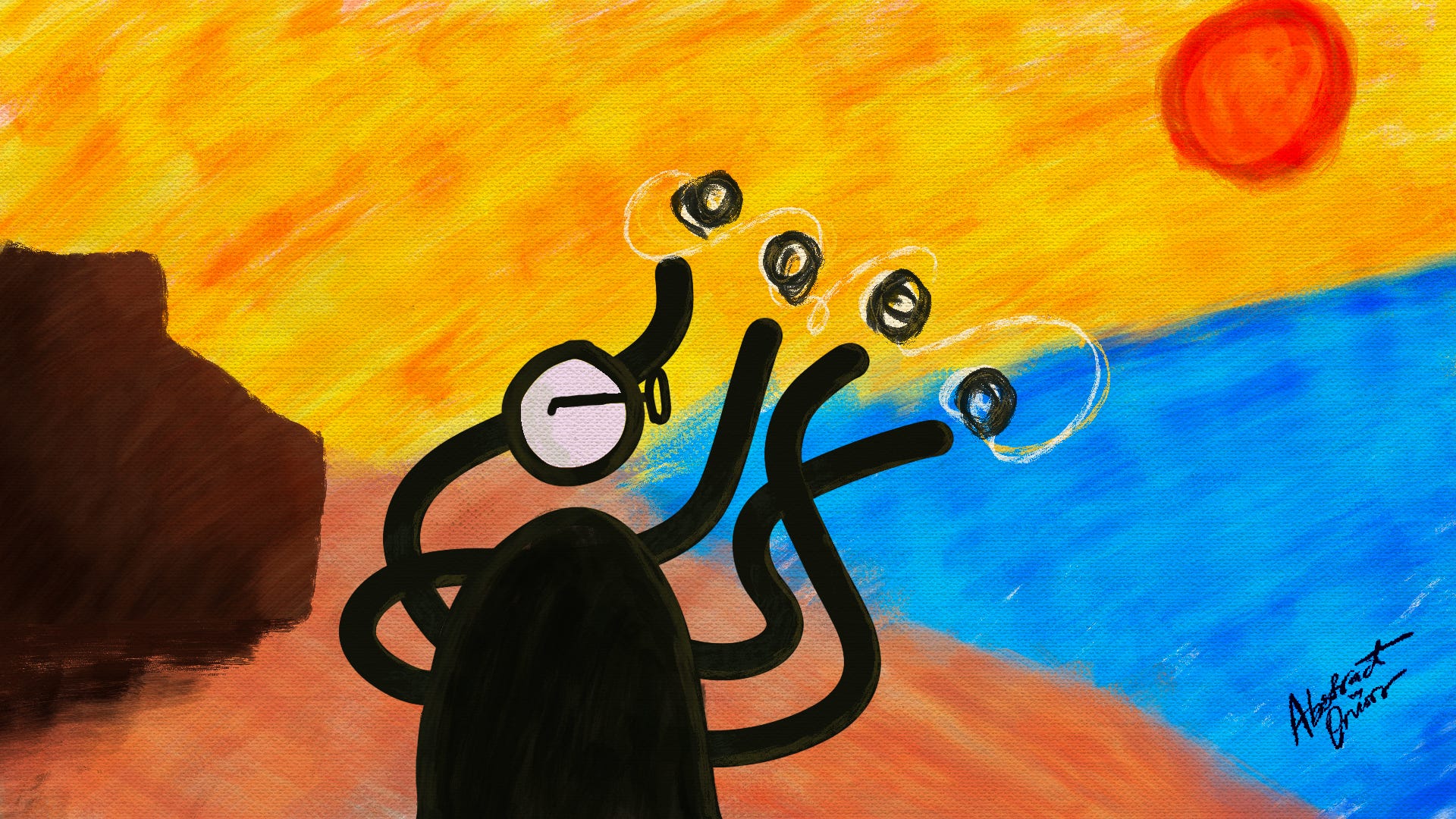
Being a designer asks that you comfortably wield complex issues, systems, processes, and perspectives. This fluidity needs to be sustained, and we cannot do this if we keep setting boundaries on what a designer can and cannot learn to design.
When we nurture the compounding of diverse ideas by carefully connecting unlikely dots, we are practicing creative transference. This cross-connection is just as important as the isolated ideas themselves—sometimes even more.
Why is this important?
Maybe consider that the most valuable innovations have come about from the unlikely transference of ideas between two or more unrelated fields or industries throughout history.
Also, to paraphrase Frank Chimero, design is an unending battle for beauty, simplicity, usefulness, and balance. If not, the world may devolve into an ugly, complicated, unbalanced, and inconsistent place. Whatever it takes for us to achieve this, I think it is safe to say that there should be little limits on what we need to do and even lesser limits on what we need to learn to do them.
Design is many; design is one. And this is a designer’s life.
This was a great read. Thanks, Caleb
A beautiful thing to start one's day with ♥️